English
A SHORT HISTORY
History of bellows instruments
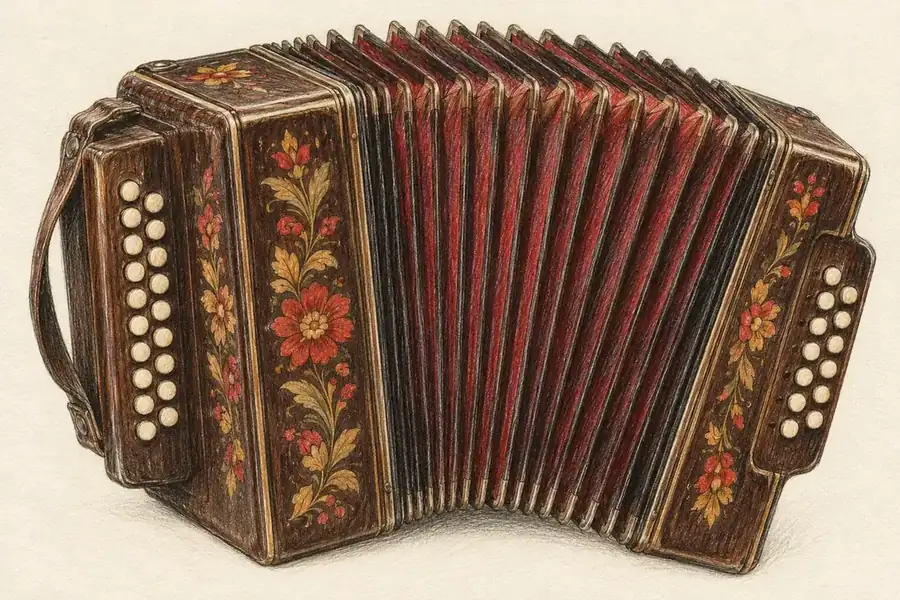
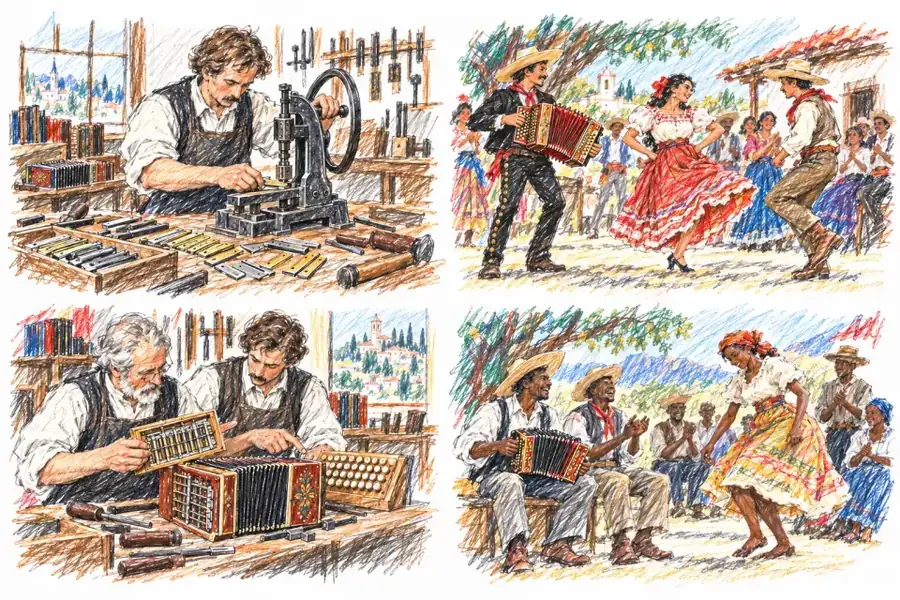
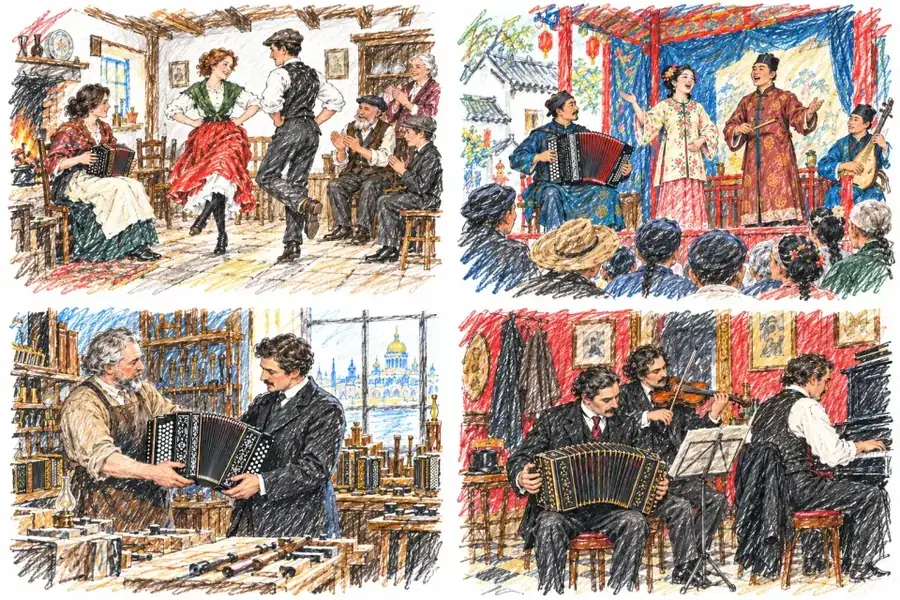
Accordions, concertinas, and bandoneons share reeds set in motion by air from a bellows. From European workshops, they traveled to homes, dance halls, and musical traditions around the world. This timeline follows both changes to the instruments and the people who gave them new roles in local music.
Let's follow how bellows instruments developed and spread around the world!
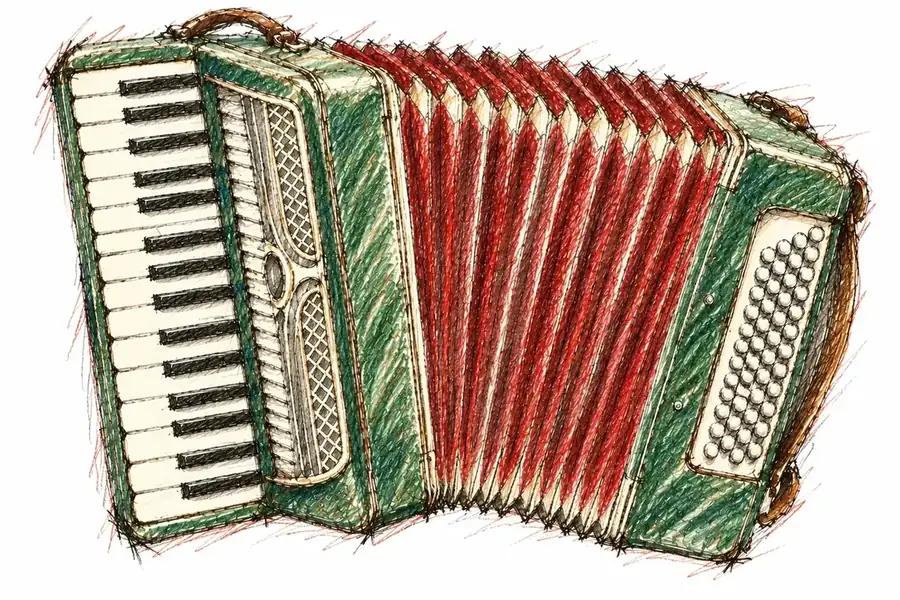
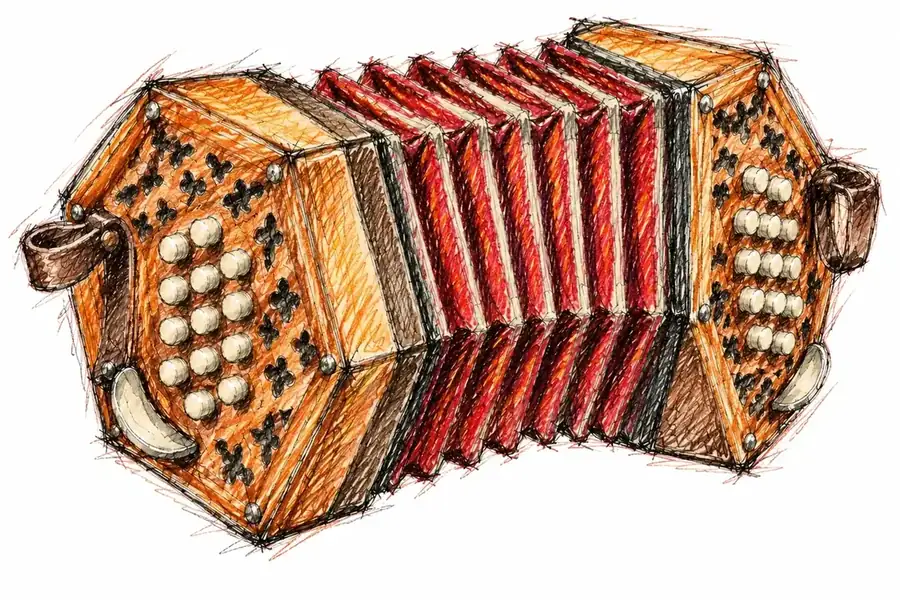
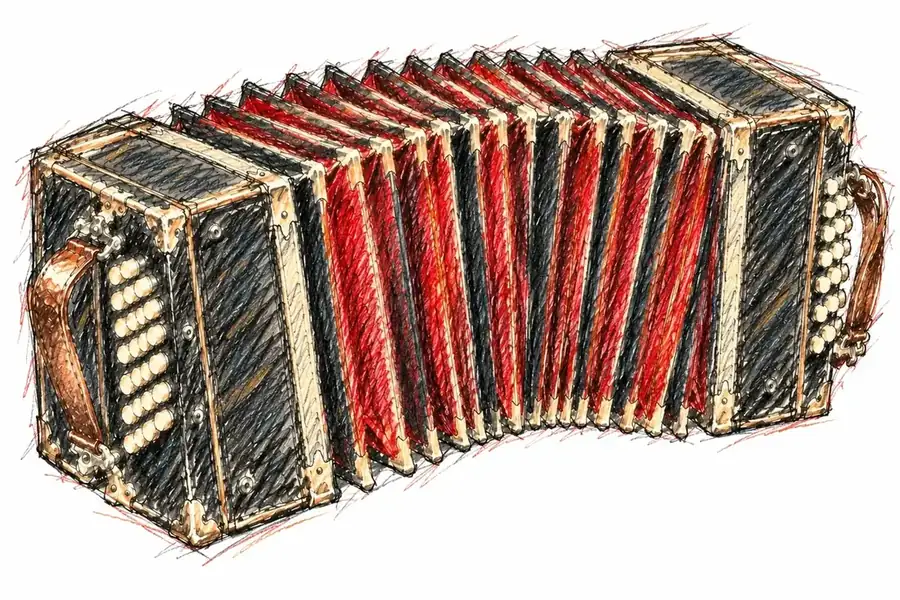
INSTRUMENT FAMILY TREE
How the instruments branched
DOCUMENTED MILESTONES
From invention to local traditions
18th century
- 1776Country / regionChina → France
A sheng reaches France
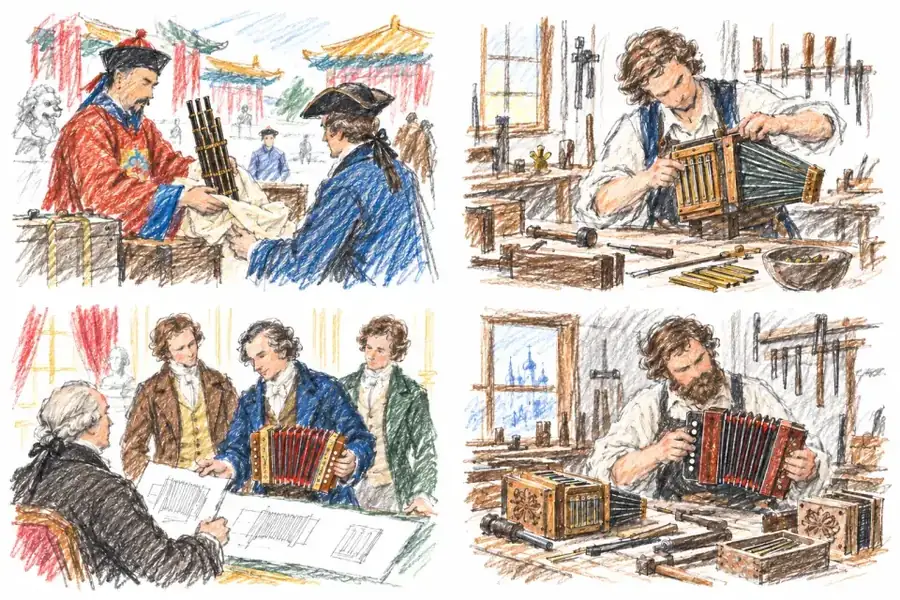
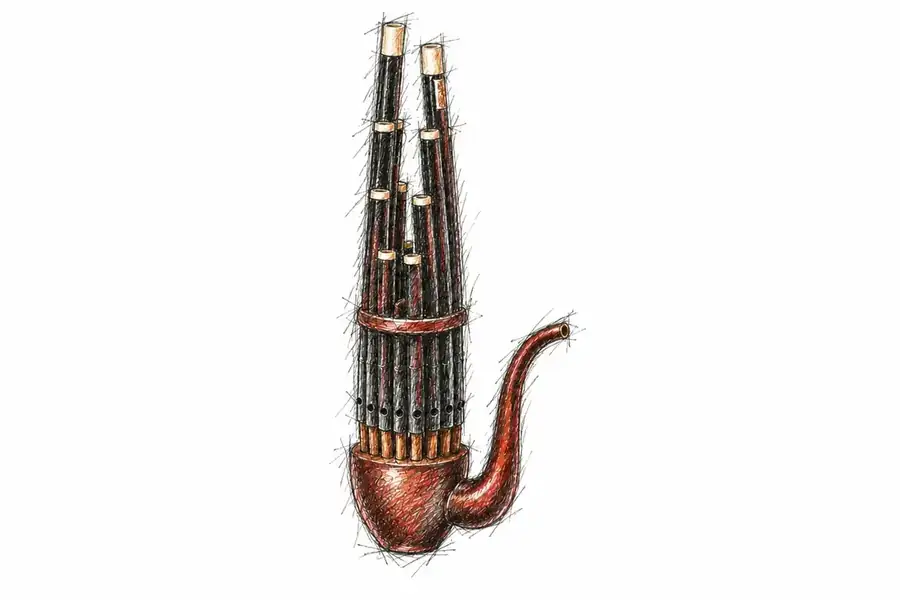
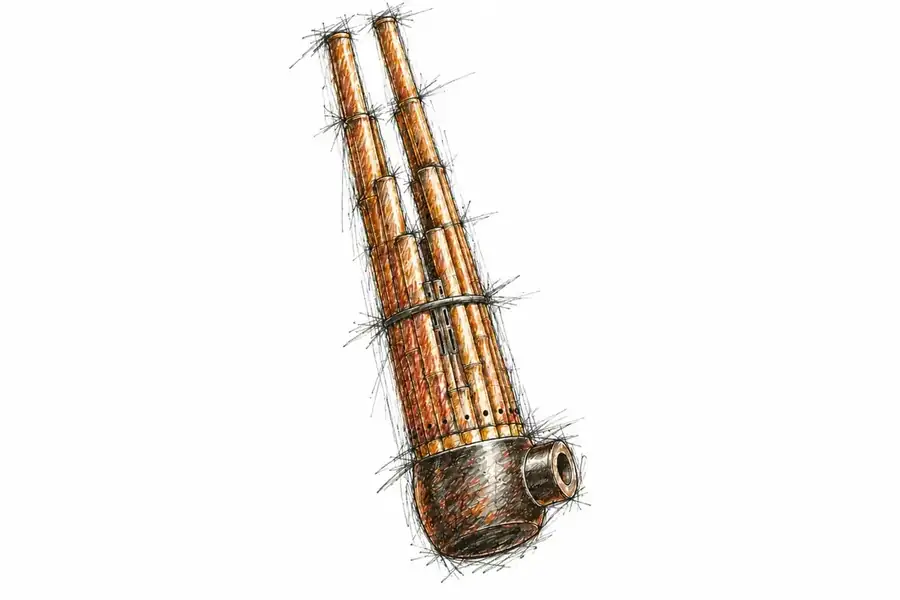
Chinese sheng and Japanese shō sound free reeds with the player's breath. In 1776, the Jesuit Joseph-Marie Amiot sent a sheng from Beijing to the French minister Henri Bertin. This is one of the early documented routes by which an Asian free-reed instrument reached Europe.
Source: Musée de la musique, Philharmonie de Paris
19th century
- c. 1822 (attributed)Country / regionGermany
The Handäoline attributed to Buschmann
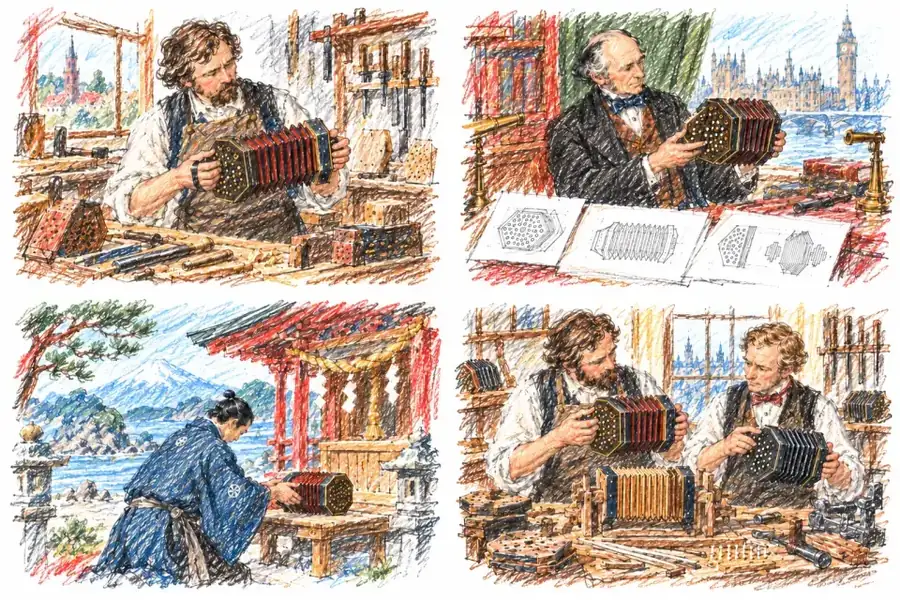
Buschmann is often credited with adding a bellows to a free-reed tuning device to make the Handäoline. The traditional date of 1822 lacks supporting contemporary evidence, so his role in the accordion's invention remains uncertain. The story is often used to explain the origins of bellows instruments, making the distinction between tradition and documented evidence important.
Source: Gorka Hermosa · The Accordion in the 19th Century - 1829Country / regionAustria
The Accordion is named in Vienna
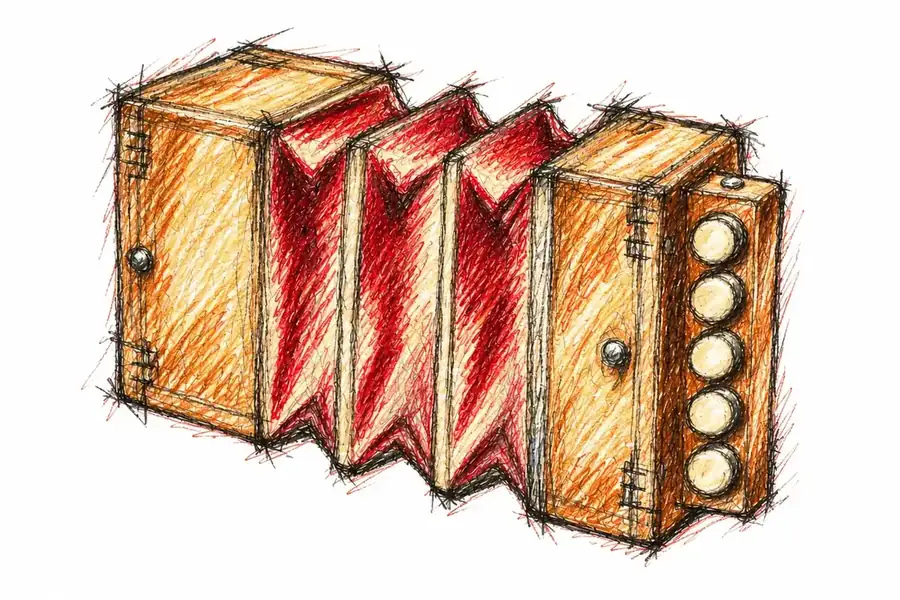
On 6 May, Viennese organ and piano maker Cyrill Demian and his sons Karl and Guido submitted a description and drawings of their Accordion. In the illustrated design, the left hand worked five buttons and the right hand moved the bellows. Each button sounded a chord, changing to another chord when the bellows reversed. The dated application and drawings provide a firm reference point for the name Accordion and its early design.
Source: TU Wien Archive - 1830sCountry / regionRussia
Hand accordions take root in Tula
A museum account in Tula, Russia, records that metalworker Ivan Sizov brought back a five-button bellows instrument in 1830, copied it, and organized local production. The city became a center of Russian hand accordion making.
Source: ARTEFACT · Tula harmonica museum record - 1834Country / regionGermany
A German concertina takes shape
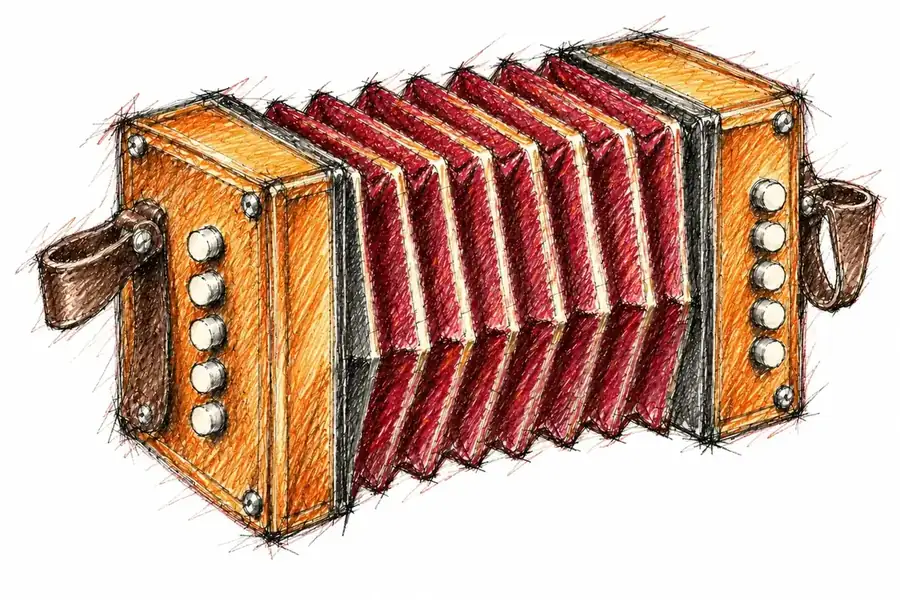
In Chemnitz, Carl Friedrich Uhlig offered his small, two-sided instrument as an ‘Accordion of a new kind.’ Its five buttons on each side sounded different notes as the bellows opened and closed. Its buttons on both ends helped establish a distinct concertina branch within the bellows-instrument family.
Source: Carl Friedrich Uhlig & Tango · Biografie - 1844Country / regionUnited Kingdom
The English concertina is patented
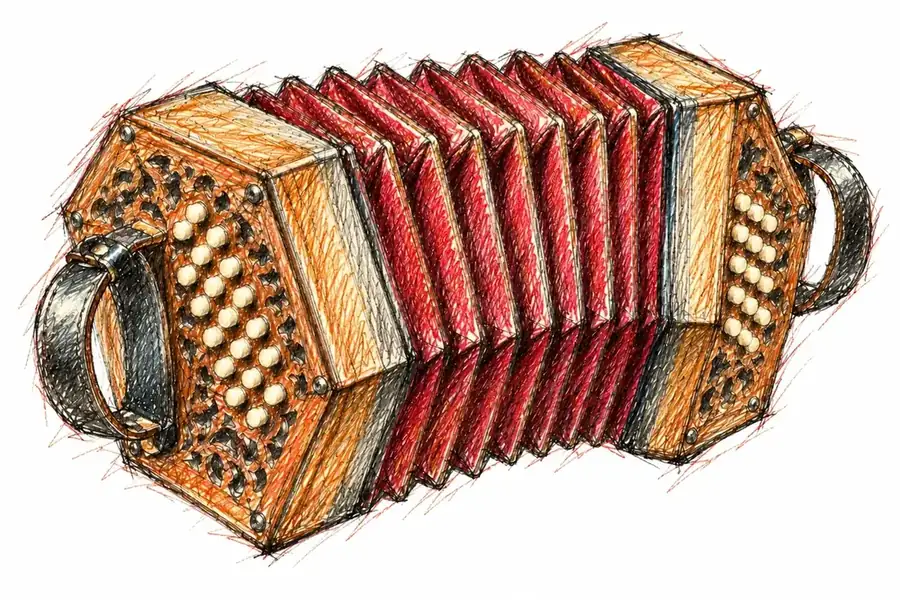
Charles Wheatstone had worked on the concertina since 1829 and introduced it publicly in 1835. He patented its design in 1844. Early English concertinas had six-sided cases, with notes divided between the two hands and a bellows driving air through free reeds. The patent documents a British concertina design with a different layout from the German instrument.
Source: King's College London - 1849Country / regionJapan
An accordion is dedicated to Miho Shrine
An exhibition catalogue from Matsue History Museum records an accordion dedicated to Miho Shrine in Shimane by Asahi Sensuke in 1849. It also lists another accordion dedicated there in 1867. These dedication records are early evidence that the accordion had reached Japan by the mid-nineteenth century.
Source: 松江歴史館・2017年企画展出品目録 - Around 1850Country / regionUnited Kingdom
The Anglo-German concertina emerges
English makers began combining the German concertina's note layout with English-style construction and a six-sided shape. This Anglo-German system is now usually called the Anglo concertina. The combination became the basis of the later Anglo concertina tradition.
Source: International Concertina Association · Concertina History - 1850sCountry / regionFrance
New ways to arrange the notes
Chromatic button layouts expanded the available notes in the 1850s. A piano-keyboard accordion is thought to have been built in Paris around 1852, although that design spread widely only later. These layouts widened the range of keys and music that players could approach on a bellows instrument.
Source: Schott Music · Typologie des Akkordeons - After 1855Country / regionGermany
The Bandonion takes its name
The Band family used the name Bandonion for a particular German free-reed instrument. Unlike the early accordion, its buttons did not play preset chords.
Source: Smithsonian Folkways - By 1858Country / regionTahiti (French protectorate)
Accordions cross oceans
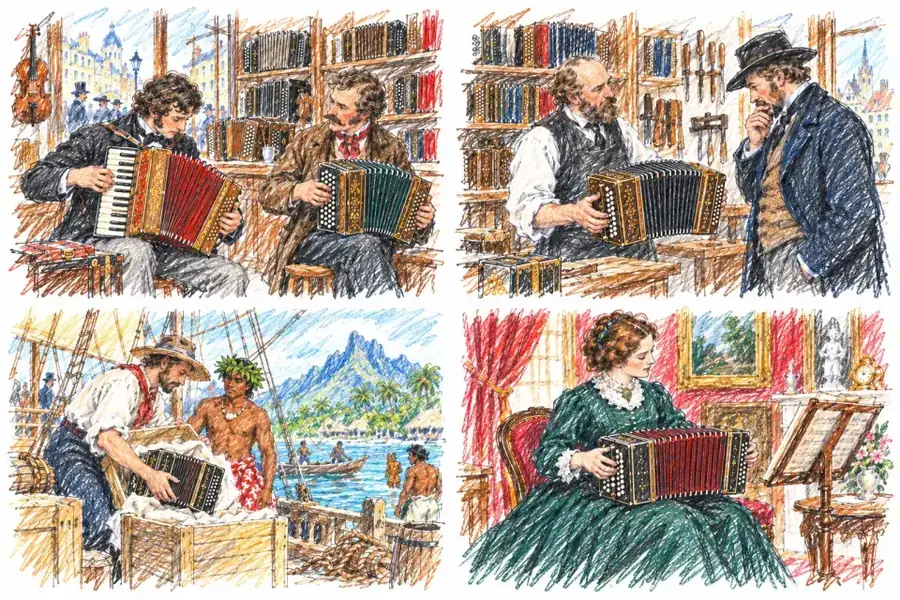
A Smithsonian accordion was collected in Tahiti before 1858. The surviving object records how far a portable bellows instrument had traveled by the mid-nineteenth century.
Source: Smithsonian Institution - Late 1850sCountry / regionUnited Kingdom
Wheatstone develops a duet concertina
Wheatstone made a 24-key rectangular 'duett' concertina. With lower notes on the left and higher notes on the right, it was designed for playing a melody with accompaniment. Each button sounded the same note on push and pull.
Source: International Concertina Association · Concertina History - 1863Country / regionItaly · Castelfidardo
Accordion production begins in Castelfidardo
Paolo Soprani established an accordion company in Castelfidardo. The museum there traces the town's long instrument-making tradition to his workshop and the craftspeople who followed.
Source: Castelfidardo Accordion Museum · World Accordion Museum Alliance - 1869Country / regionColombia · Caribbean coast
An accordion reaches Colombia's Caribbean coast
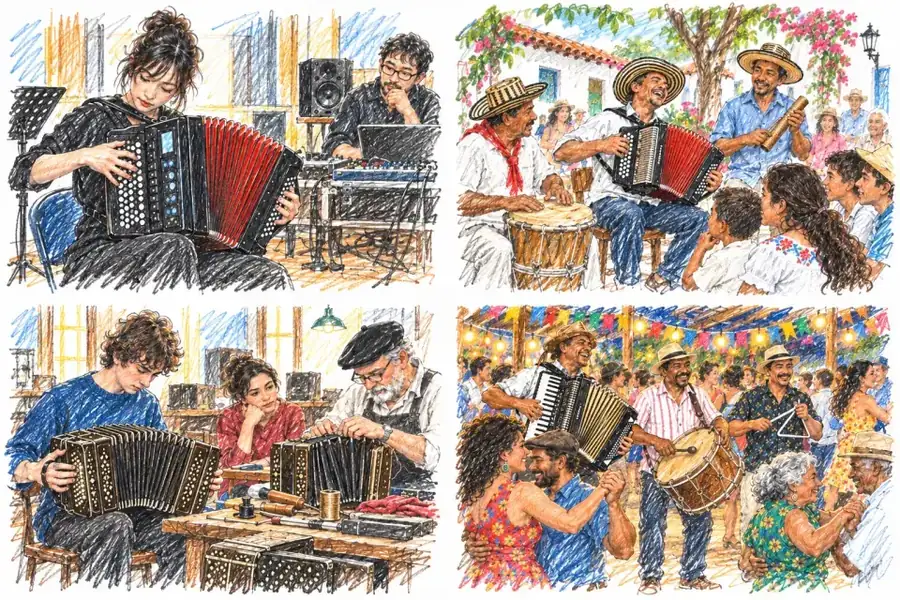
A Banco de la República history records an accordion arriving in Santa Marta in 1869 and another in Mompox the following year. It also documents a 1893 dance ensemble in Riohacha with accordion, guacharaca, and drum.
Source: Banco de la República · Acordeón y Bandoneón - Around 1870 (local tradition)Country / regionRussia
A garmon tradition grows in Shuya
According to a Shuya tradition, Ivan Sokolov brought an accordion home from the Nizhny Novgorod fair in 1870 and made his own version. Local makers went on to develop the region's garmons.
Source: Russia Beyond · How the accordion became Russified - 1870sCountry / regionJapan
The tale of Murata Shinpachi's hand accordion
Murata Shinpachi is said to have brought back a tefūkin from his travels and played it. The story is sometimes told with a concertina, but the cited historical account does not establish the instrument's exact type.
Source: 国指定 西南戦争遺跡・2021年歴史講座資料 - 1878Country / regionGermany
Machines change accordion making in Klingenthal
In Klingenthal, Julius Bertold built stamping and milling machines that made reed plates and accordions easier to produce. The local harmonica industry expanded in the 1880s.
Source: Deutscher Harmonika-Verband · Akkordeon-Geschichte - Late 19th centuryCountry / regionMexico · northeast / United States · South Texas
The accordion crosses the Mexico–Texas borderlands
German and Italian immigrants brought accordions to northeastern Mexico and South Texas. Local musicians folded polkas and waltzes into conjunto and norteño traditions; early groups used one-row button accordions.
Source: Smithsonian Folkways · Arhoolie Records - c. 1890Country / regionItaly · Stradella
The Stradella bass mechanism takes shape
At the Dallapè workshop in Stradella, the accordion's left-hand bass mechanism developed into what became known as the Stradella system around 1890. It was subsequently adopted widely by accordion makers.
Source: Lombardia Beni Culturali · Museo della Fisarmonica Mariano Dallapè - From the late 19th centuryCountry / regionSouth Africa
Concertinas enter South African musical traditions
Sotho and Mpondo migrant workers used concertinas to accompany singing and dancing. Musicians brought the portable instrument back to rural communities, where it also took root in Zulu musical traditions.
Source: International Concertina Association · The Black Concertina Tradition of South Africa - By 1900Country / regionIreland · County Clare
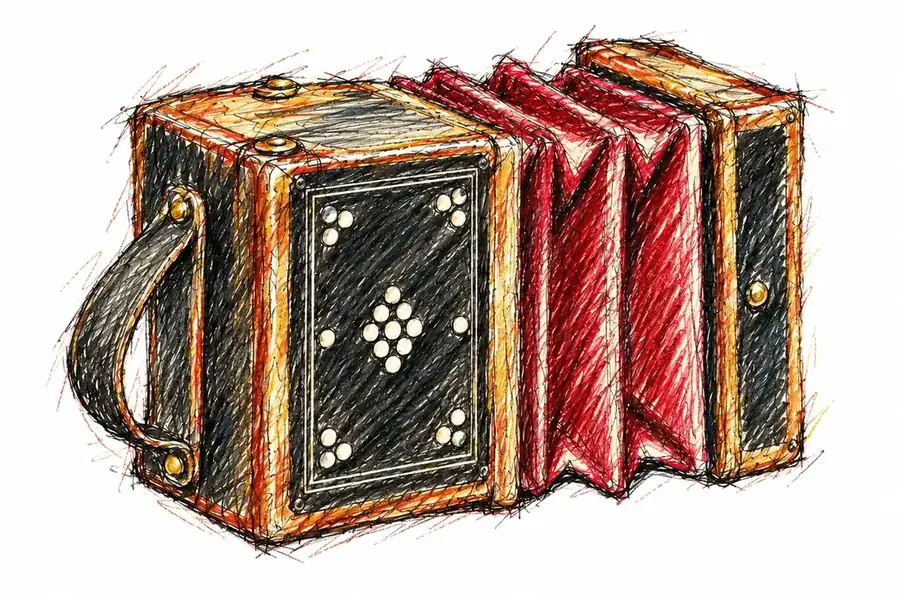
Concertinas become a household instrument in Clare
In County Clare, inexpensive concertinas became part of home music and set dancing. Women were among the main players and buyers; by 1910, shops in several Clare towns stocked the instruments.
Source: International Concertina Association · Clare: the Heartland of the Irish Concertina
20th century
- Early 20th centuryCountry / regionChina
The accordion spreads in China
In the first half of the twentieth century, the accordion became part of musical life in China. A history lecture at the Central Conservatory of Music recalled its role in performances that rallied audiences during the national liberation movement.
Source: 中央音乐学院 · 中国手风琴发展史讲座 - By 1903Country / regionUnited Kingdom · Scotland
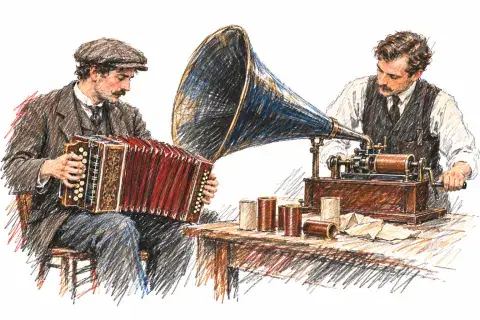
A melodeon performance is sold on wax cylinder
Scottish player and record maker Peter Wyper recorded his melodeon playing on wax cylinders and sold them locally. A trade journal described one of his accordion records in August 1903. These surviving reports show how a local playing style began to reach listeners beyond the performance itself; an earlier accordion recording has not been ruled out.
Source: Box and Fiddle Archive · Peter and Daniel Wyper - 1907Country / regionRussia
The bayan takes shape in St Petersburg
St Petersburg maker Pyotr Sterligov built a four-row chromatic accordion for player Yakov Orlansky-Titarenko. The name bayan had been used earlier, but became associated with this Russian chromatic-button instrument.
Source: Kirillo-Belozersky Museum · Musical Instruments Catalogue - 1910sCountry / regionArgentina · Buenos Aires
The bandoneon takes root in tango orchestras
From 1910, quartets featuring the bandoneon helped form the first orquestas típicas, tango ensembles built for dancing. As these orchestras spread, the bandoneon became one of the sounds most closely associated with tango.
Source: Buenos Aires Ciudad · Orquesta Típica - 1920sCountry / regionUnited States · Louisiana
The accordion settles into Cajun music
Accordions were documented in Louisiana by 1871, but Cajun musicians adopted them gradually. German-made one-row button accordions became popular in the early 1900s. C- and D-key models imported in the 1920s worked well with fiddles and helped make the accordion a leading dance instrument.
Source: Louisiana Folklife · Malcolm Comeaux - 1924Country / regionArgentina · Buenos Aires
Two bandoneons in a new tango sextet
Julio de Caro's sextet brought Pedro Maffia and Luis Petruccelli together on bandoneons with violins, piano, and bass. Their arrangements marked a turning point in Argentine instrumental tango.
Source: Argentina Secretaría de Cultura · Julio de Caro - 1920sCountry / regionFrance
The accordion reshapes Parisian bal musette
Italian immigrants brought accordions into Parisian dance music, where they displaced the Auvergnat bagpipe known as the musette. Waltzes, tango musette, and other dances made the accordion a familiar sound of the bal musette.
Source: Musée de la musique, Philharmonie de Paris · Accordéon diatonique - 1931–32Country / regionJapan
TOMBO begins making accordions in Japan
TOMBO began making and selling diatonic button accordions in 1931. The following year it released its first piano-keyboard model, the Lyrico. In Japan, makers were beginning to produce both diatonic and piano-keyboard accordions themselves.
Source: トンボ楽器製作所 · 沿革 - 1935Country / regionRussia
Shuya's workshops become a factory
Workshops making garmons in Shuya were brought together as the Shuya Accordion Factory. Its decorated instruments carried the region's craft into factory production.
Source: ARTEFACT · Shuya garmon museum record - 1936Country / regionUnited States · San Antonio, Texas
Accordion and bajo sexto recorded together in Texas
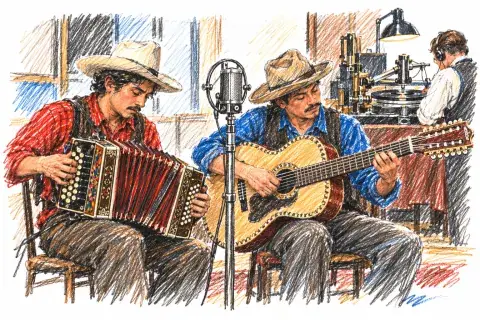
On 21 October in San Antonio, button accordionist Narciso Martínez and bajo sexto player Santiago Almeida recorded “La Chicharronera.” It is among the earliest known conjunto records with this pairing: the accordion carries the melody while the 12-string bajo sexto supplies bass and rhythm. The record preserves a sound that became characteristic of Texas-Mexican conjunto music.
Source: Library of Congress · La Chicharronera - 1937–43Country / regionChina · Shanghai / Yan'an
Accordions accompany wartime performances in China
Qiao Suying's survey notes that small harmonica and accordion concerts continued in Shanghai and other cities after war broke out in 1937. It also describes accordion use in Yan'an's New Yangge Movement from 1943. The instrument also had a place in public cultural performances during the war.
Source: 乔苏颖 · 浅谈手风琴在中国的发展(《音乐时空》2013年第17期) - 1938Country / regionFrance
Gus Viseur records Swing cocktail
On 20 October in Paris, Gus Viseur recorded Swing cocktail on accordion with three guitarists and a double bassist. The session documents an accordion in a swing ensemble. By the late 1930s, the instrument had a documented place in Parisian swing as well as dance music.
Source: Bibliothèque nationale de France · Swing accordéon recording catalogue - 1942Country / regionItaly · Stradella
Dallapè patents a converter bass mechanism
In Stradella, the Dallapè firm patented a converter for the accordion's left-hand bass mechanism. It allowed the same button manual to switch between standard Stradella bass accompaniment and free bass, in which buttons play individual notes. The design broadened the left hand's role from preset accompaniment to individual notes.
Source: Lombardia Beni Culturali · Museo della Fisarmonica Mariano Dallapè - Late 1940sCountry / regionBrazil · Northeast
The sanfona gives baião a national audience
Luiz Gonzaga's baião brought music from Brazil's Northeast to listeners across the country. The combination of sanfona (accordion), zabumba drum, and triangle became a familiar sound of Northeastern music.
Source: Biblioteca Nacional do Brasil · Luiz Gonzaga, o rei do Baião - After World War IICountry / regionUnited States · Louisiana
Louisiana makers build their own accordions
Wartime disruption of German imports made accordions scarce. Local players repaired instruments and began making one-row accordions in Louisiana; Sidney Brown was among the makers who shaped the postwar Cajun accordion tradition.
Source: Louisiana Folklife · Malcolm Comeaux - 1947Country / regionJapan
Accordions for school ensembles
TOMBO's history records a Japanese ensemble accordion made without left-hand bass buttons. Models in different registers let players divide parts across a school ensemble.
Source: トンボ楽器製作所 · 沿革 - 1950s–70sCountry / regionChina
The accordion reaches workplaces, troupes and schools
Qiao Suying's account describes accordions in military and workplace cultural troupes, amateur performances and school music in the decades after 1949. Their portability and ability to carry melody with accompaniment helped make the instrument familiar beyond concert halls.
Source: 乔苏颖 · 浅谈手风琴在中国的发展(《音乐时空》2013年第17期) - 1951–52Country / regionChina · Shanghai
Baile begins making accordions in Shanghai
Shanghai Baile Musical Instrument Company raised funds to set up a factory in 1951 and made its own-brand accordions in 1952. An instrument numbered 13 from that first batch was displayed at a Jiading history exhibition in 2023. The surviving early instrument gives a concrete trace of accordion making under a Chinese brand.
Source: 上海嘉定 · 百乐手风琴历史展 - 1952Country / regionChina · Chongqing
Accordion making in Chongqing
According to records discussed by musicians and historians at Chongqing Normal University, a local instrument repair workshop copied a Japanese accordion and made an 18-bass model in 1952. This shows accordion making taking shape in a local workshop outside Shanghai.
Source: 重庆师范大学音乐学院 · 手风琴史学交流会 - 1950sCountry / regionUnited States · Louisiana
Clifton Chenier brings the piano accordion to zydeco
In Louisiana's Black Creole music, Clifton Chenier blended local dance traditions with blues and R&B. He made his first recordings on piano accordion in the early 1950s; later recordings brought zydeco to audiences beyond the region.
Source: Smithsonian Folkways · Arhoolie Records: Cajun and Zydeco - 1950sCountry / regionArgentina · Buenos Aires
Piazzolla opens a new path for the bandoneon
Bandoneonist Astor Piazzolla developed nuevo tango after studying composition in Paris. He brought counterpoint, contemporary harmonies, and jazz influences into tango, widening the instrument's expressive role.
Source: Argentina Secretaría de Cultura · Astor Piazzolla - Mid-1950sCountry / regionIreland → United States · New York
Paddy O'Brien's B/C accordion playing in New York
Accordionist Paddy O'Brien moved from County Tipperary to New York in the mid-1950s. His inventive playing on a two-row B/C button accordion gained a following in the city's Irish music community and influenced traditional playing.
Source: Irish Traditional Music Archive · Paddy O’Brien (Tipperary) Compositions - 1957Country / regionUnited States
Left-hand buttons switch between chords and single notes
A US patent application described a mechanism that changed the accordion's left-hand chord buttons to sound individual notes. The same button manual could serve both chord accompaniment and free-bass playing. The design aimed to let players move between accompaniment and melodic left-hand parts on one instrument.
Source: US Patent 2,979,980 · Movable convertor for the bass mechanism of an accordion - 1958Country / regionChina · Tianjin
Accordion studies at Tianjin Conservatory
Tianjin Conservatory of Music established an accordion major within its piano department in 1958. Formal training became another part of the instrument's development in China.
Source: 中国文化和旅游部 · 天津国际手风琴艺术节 - 1958Country / regionDenmark
An orchestral work for accordion soloist
Ole Schmidt wrote Symfonisk Fantasi og Allegro for accordion and orchestra in close collaboration with the soloist Mogens Ellegaard. The work gave the accordion a solo role alongside an orchestra.
Source: Wise Music Classical · Symfonisk Fantasi og Allegro - 1960sCountry / regionUnited Kingdom and elsewhere
A concertina folk revival
The concertina's popularity had declined in the early twentieth century. The folk revival of the 1960s brought renewed interest in the instrument. The revival gave a declining instrument a renewed place in folk performance.
Source: Horniman Museum and Gardens - 1965Country / regionItaly → United Kingdom
Farfisa files an electronic accordion patent
Italian manufacturer Farfisa filed a UK patent application for an electronic accordion. Its description places circuit boards and tuning coils inside the bellows. The application was published in 1968. The application records an early attempt to combine electronic circuitry with the familiar bellows structure.
Source: Farfisa · UK patent application GB1101154A - 1966Country / regionItaly → United Kingdom
Transicord is advertised in Britain
A Farfisa advertisement in the 4 June issue of Melody Maker presented the Transicord as an electronic organ for accordion players. It looked and played like an accordion and could be connected to an amplifier. Electronic bellows instruments were now being promoted to players as products, beyond their appearance in patent applications.
Source: Melody Maker · Farfisa advertisement (4 June 1966) - 1967Country / regionUnited Kingdom
A new duet keyboard: the Hayden system
Brian Hayden devised a new duet concertina keyboard layout, adding another way to arrange notes for melody and accompaniment. Makers were still seeking new ways to divide melody and accompaniment between the hands in the late twentieth century.
Source: International Concertina Association · Concertina History - 1967Country / regionJapan
TOMBO releases an electronic accordion
TOMBO's history says it developed, manufactured, and released what it calls Japan's first domestically made electronic accordion in 1967. The pictured model is identified as the DALC (DS-32). Electronic approaches to the accordion had also entered Japanese domestic manufacture.
Source: トンボ楽器製作所 · 沿革 - 1971Country / regionDenmark
Accordion studies begin at the Royal Danish Academy
The Royal Danish Academy of Music began offering accordion studies. The course gave performers a lasting place to study concert repertoire and train professionally at the conservatory.
Source: The Royal Danish Academy of Music · 50 years of accordion education - 1978Country / regionSoviet Union
Gubaidulina composes De profundis for solo bayan
Sofia Gubaidulina composed De profundis for solo bayan and dedicated it to Friedrich Lips. Lips gave the first performance in Moscow on 8 April 1980. It is an example of a contemporary composer choosing the bayan for a dedicated solo work.
Source: IRCAM · De profundis (1978) - Early 1980sCountry / regionChina · Tianjin
Free-bass study grows through exchange in Tianjin
At Tianjin Conservatory, Wang Yuping invited visiting accordionists, including Mie Miki, for concerts and master classes. He also introduced free-bass accordion teaching into conservatory training, widening the repertoire available to Chinese students.
Source: 中央音乐学院 · 首届国际手风琴艺术节学术活动 - 1991Country / regionFrance
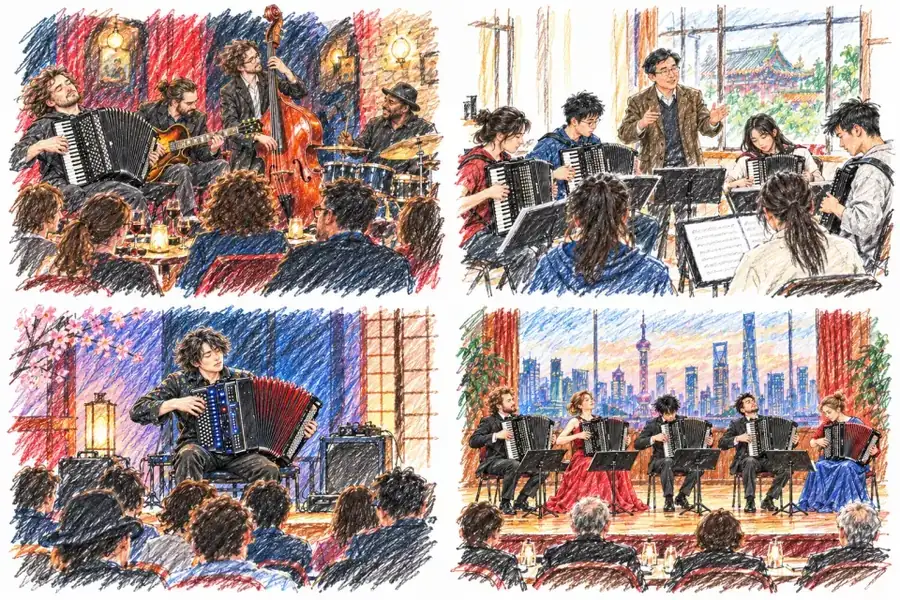
Galliano releases New Musette
Richard Galliano released the album New Musette with guitar, bass, and drums. He revisited French musette through jazz rhythms and harmonies, giving the accordion another place in contemporary ensemble music.
Source: Deutsche Grammophon · Richard Galliano biography
21st century
- 2004Country / regionChina · Beijing
Accordion major at the Central Conservatory
Accordionist Cao Xiaoqing founded an undergraduate accordion major at Beijing's Central Conservatory of Music in 2004. The conservatory added an accordion program at its attached secondary school the following year. After accordion study developed in cities such as Tianjin, it also gained an undergraduate place at Beijing's Central Conservatory.
Source: 中央音乐学院 · 国际手风琴艺术节 - 2004Country / regionJapan / Italy
A digital accordion keeps the bellows
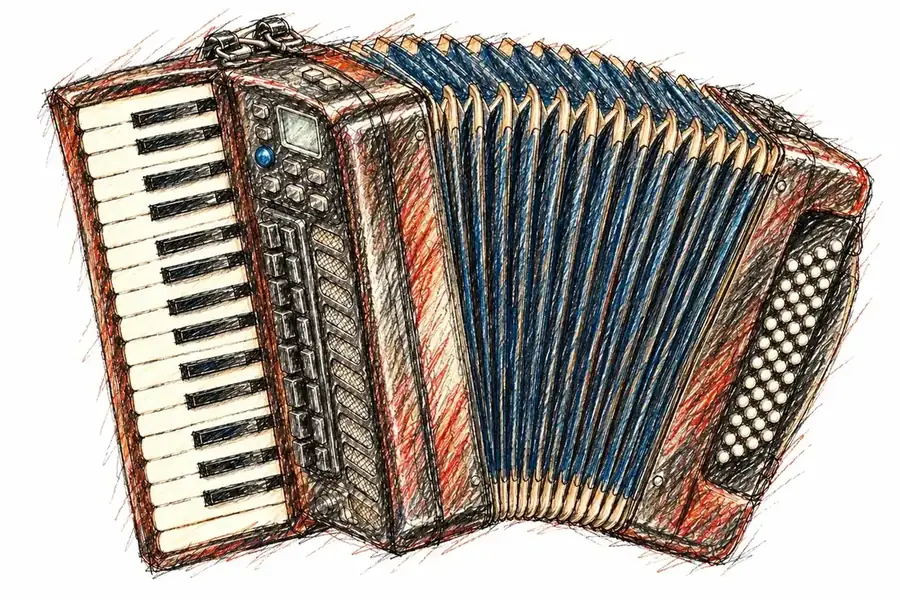
Roland announced its V-Accordion FR-7 in 2004. Its digital sound engine offers selectable accordion and orchestral timbres while the player still shapes expression with the bellows.
Source: Roland・2004年ニュースリリース - 2011Country / regionChina · Shanghai
Shanghai hosts the 64th Coupe Mondiale
The 64th Coupe Mondiale accordion competition took place in Shanghai. Chinese organizers brought international contestants and judges together there, reflecting the growing exchange between China's accordion community and musicians abroad.
Source: 中央音乐学院 · 首届国际手风琴艺术节学术活动 - 2013Country / regionJapan
Digital bellows respond to the notes being played
Roland introduced the FR-8x and FR-8xb V-Accordions. Their Dynamic Bellows Behavior changes the bellows' air resistance according to the selected register and the number of notes played, extending the expressive control of the digital accordion.
Source: Roland · 2013 FR-8x announcement - 2015Country / regionColombia · Caribbean coast
Traditional vallenato enters UNESCO's urgent safeguarding list
Traditional vallenato of Colombia's Greater Magdalena region, played with accordion, caja drum, and guacharaca, was inscribed on UNESCO's List of Intangible Cultural Heritage in Need of Urgent Safeguarding. The urgent-safeguarding listing also drew attention to the risks facing the tradition's transmission.
Source: UNESCO · Traditional Vallenato music of the Greater Magdalena region - 2020Country / regionArgentina · Corrientes Province
Chamamé enters UNESCO's intangible cultural heritage list
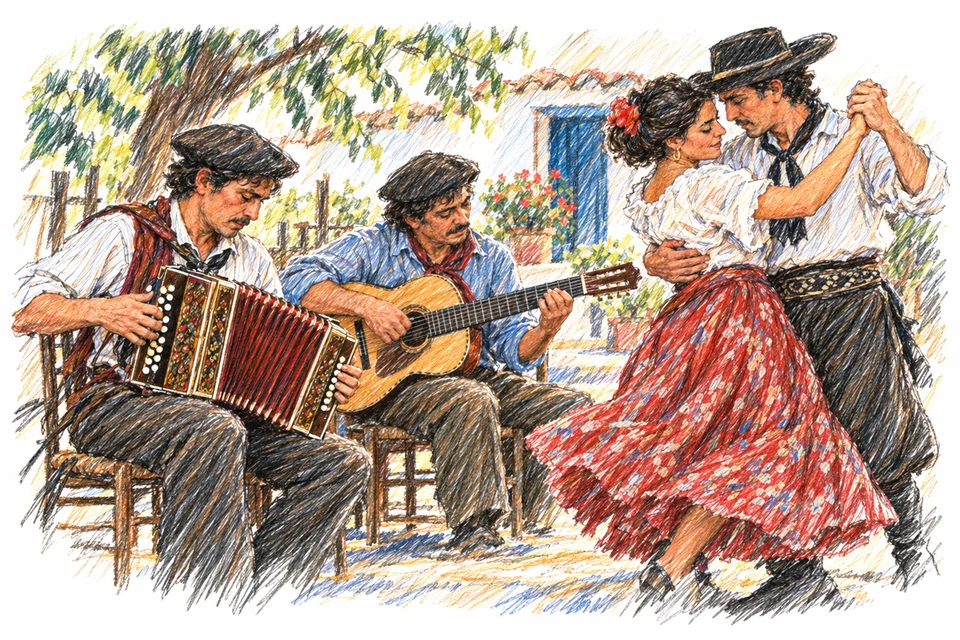
Chamamé, a music and dance tradition practised mainly in Argentina's Corrientes Province, was inscribed on UNESCO's Representative List of the Intangible Cultural Heritage of Humanity. Its instruments include the two-row diatonic button accordion and the bandoneon.
Source: UNESCO · Chamamé - 2020–23Country / regionUruguay
Uruguay passes on bandoneon playing and repair
A Uruguay-based safeguarding project created free bandoneon classes in four regions and opportunities for young people to learn instrument repair and making. It addressed the shortage of players, teachers, and luthiers.
Source: UNESCO · The Bandoneon: sound of Tango - 2021Country / regionBrazil
Traditional forró is recognized as Brazilian cultural heritage
Brazil registered the traditional forms of forró as national intangible cultural heritage. The recognition includes the music, dance, and knowledge passed between generations, with the sanfona among its emblematic instruments.
Source: IPHAN · Matrizes tradicionais do forró - 2022Country / regionArgentina · Buenos Aires Province
An electronic bandoneon prototype in Argentina
Researchers at the National University of Quilmes presented Alfa, an electronic bandoneon prototype with buttons and a bellows. Sensors detect the player's actions and turn them into digital performance data. It remained a research prototype at the time of the report. The prototype tests a way to carry the bandoneon's familiar physical controls into a digital instrument.
Source: Universidad Nacional de Quilmes · Bandoneón 2.0 - 2024Country / regionJapan / Italy
KORG announces the FISA SUPREMA digital accordion
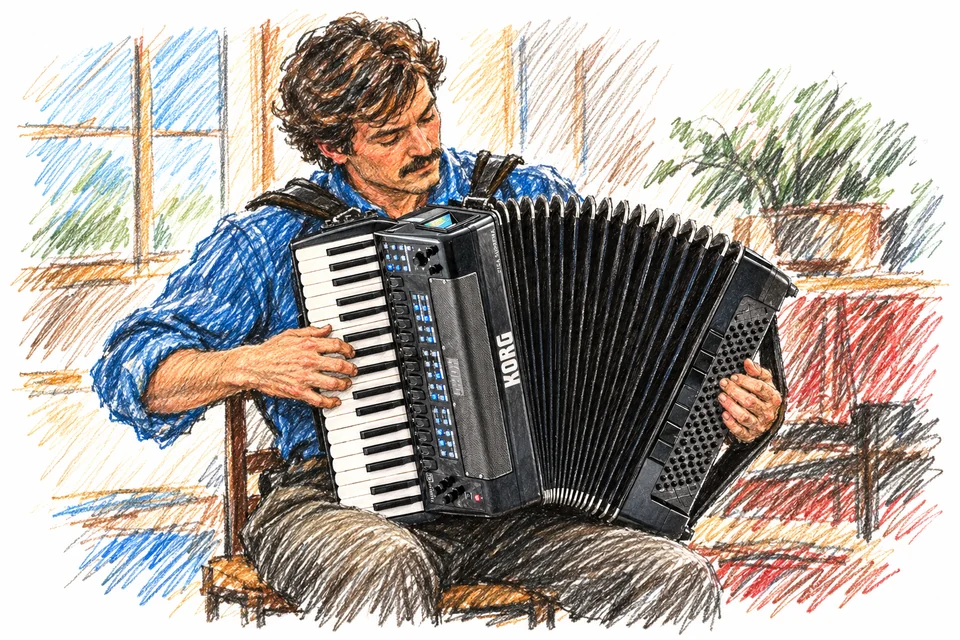
KORG announced the FISA SUPREMA digital accordion, developed jointly by KORG in Japan and Dexibell in Italy. The instrument uses Dexibell's T2L sound technology.
Source: Dexibell · Fisa Suprema (2024) - 2025Country / regionArgentina · Córdoba
Cuarteto enters UNESCO's intangible cultural heritage list
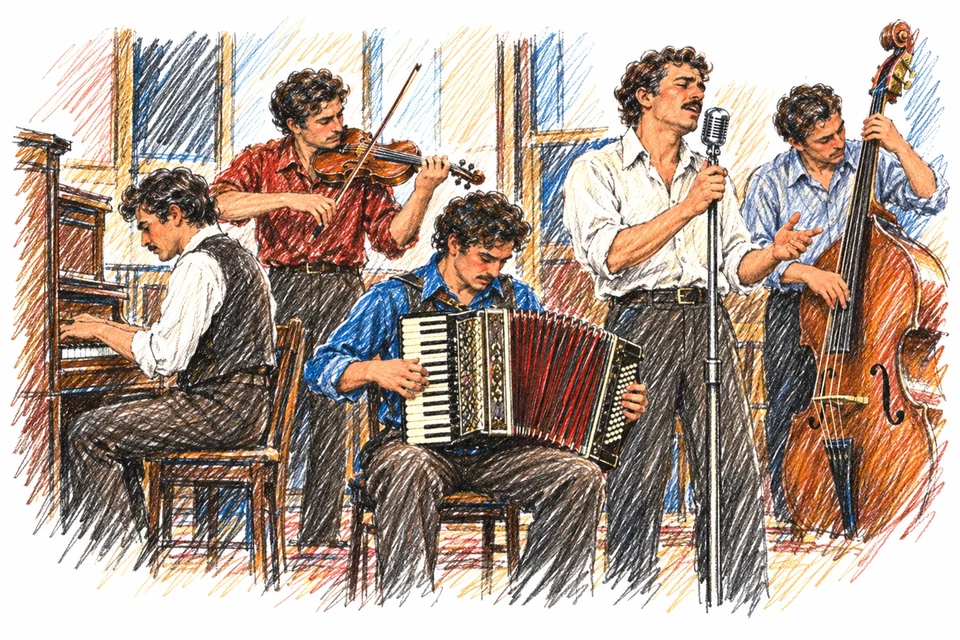
Cuarteto, the music, dance and lyrics of Córdoba, Argentina, was inscribed on UNESCO's Representative List of the Intangible Cultural Heritage of Humanity. Early ensembles featured piano, violin, accordion and double bass, with a singer leading the performance.
Source: UNESCO · Cuarteto: music, dance and lyrics in the city of Córdoba, Argentina
References
- Musée de la musique, Philharmonie de Paris
- Gorka Hermosa · The Accordion in the 19th Century
- TU Wien Archive
- ARTEFACT · Tula harmonica museum record
- Carl Friedrich Uhlig & Tango · Biografie
- King's College London
- 松江歴史館・2017年企画展出品目録
- International Concertina Association · Concertina History
- Schott Music · Typologie des Akkordeons
- Smithsonian Folkways
- Smithsonian Institution
- Castelfidardo Accordion Museum · World Accordion Museum Alliance
- Banco de la República · Acordeón y Bandoneón
- Russia Beyond · How the accordion became Russified
- 国指定 西南戦争遺跡・2021年歴史講座資料
- Deutscher Harmonika-Verband · Akkordeon-Geschichte
- Smithsonian Folkways · Arhoolie Records
- Lombardia Beni Culturali · Museo della Fisarmonica Mariano Dallapè
- International Concertina Association · The Black Concertina Tradition of South Africa
- International Concertina Association · Clare: the Heartland of the Irish Concertina
- 中央音乐学院 · 中国手风琴发展史讲座
- Box and Fiddle Archive · Peter and Daniel Wyper
- Kirillo-Belozersky Museum · Musical Instruments Catalogue
- Buenos Aires Ciudad · Orquesta Típica
- Louisiana Folklife · Malcolm Comeaux
- Argentina Secretaría de Cultura · Julio de Caro
- Musée de la musique, Philharmonie de Paris · Accordéon diatonique
- トンボ楽器製作所 · 沿革
- ARTEFACT · Shuya garmon museum record
- Library of Congress · La Chicharronera
- 乔苏颖 · 浅谈手风琴在中国的发展(《音乐时空》2013年第17期)
- Bibliothèque nationale de France · Swing accordéon recording catalogue
- Biblioteca Nacional do Brasil · Luiz Gonzaga, o rei do Baião
- 上海嘉定 · 百乐手风琴历史展
- 重庆师范大学音乐学院 · 手风琴史学交流会
- Smithsonian Folkways · Arhoolie Records: Cajun and Zydeco
- Argentina Secretaría de Cultura · Astor Piazzolla
- Irish Traditional Music Archive · Paddy O’Brien (Tipperary) Compositions
- US Patent 2,979,980 · Movable convertor for the bass mechanism of an accordion
- 中国文化和旅游部 · 天津国际手风琴艺术节
- Wise Music Classical · Symfonisk Fantasi og Allegro
- Horniman Museum and Gardens
- Farfisa · UK patent application GB1101154A
- Melody Maker · Farfisa advertisement (4 June 1966)
- The Royal Danish Academy of Music · 50 years of accordion education
- IRCAM · De profundis (1978)
- 中央音乐学院 · 首届国际手风琴艺术节学术活动
- Deutsche Grammophon · Richard Galliano biography
- 中央音乐学院 · 国际手风琴艺术节
- Roland・2004年ニュースリリース
- Roland · 2013 FR-8x announcement
- UNESCO · Traditional Vallenato music of the Greater Magdalena region
- UNESCO · Chamamé
- UNESCO · The Bandoneon: sound of Tango
- IPHAN · Matrizes tradicionais do forró
- Universidad Nacional de Quilmes · Bandoneón 2.0
- Dexibell · Fisa Suprema (2024)
- UNESCO · Cuarteto: music, dance and lyrics in the city of Córdoba, Argentina
Articles consulted
- The accordion's development in China — Qiao Suying, Music Space (2013)
- Cajun accordion — English Wikipedia
- How the accordion became Russified — Russia Beyond
- Bayan (accordion) — English Wikipedia
- From an early Chinese accordion to memories of our parents' youth — Shanghai Jiading
- History of the accordion — Classical Music
- Development of the Accordion in China (book overview) — Harbin Engineering University Press
- Concertina — English Wikipedia
- Accordion — English Wikipedia
- Demian's 1829 Accordion patent — English transcription
- Accordion — Japanese Wikipedia