Melody-button rows
Cajun, Erica G/C, Corona G/C/F, and the illustrated Styrian layout have one, two, three, and four melody rows. The Swiss Schwyzerörgeli has two diatonic rows plus an accessory row.
Maker's referenceINSTRUMENT GUIDE / 01
Accordions, concertinas, bandoneons—let's compare their shapes and keyboards!
Cajun, Erica G/C, Corona G/C/F, and the illustrated Styrian layout have one, two, three, and four melody rows. The Swiss Schwyzerörgeli has two diatonic rows plus an accessory row.
Maker's referenceThe Nova chart uses C system; the Fun Pro 120 chart shows B system, associated with the bayan tradition. Both are chromatic button layouts.
Maker's referenceStandard bass buttons provide single bass notes and preset chords. On a free-bass instrument, the left-hand buttons play individual notes; a converter model can switch between both layouts.
Maker's referenceThe melody side can have piano keys or buttons. Regional button instruments include Irish B/C, Basque trikitixa, Italian organetto, the Club system, Styrian harmonika, Viennese Schrammelharmonika, Czech and Slovak heligónka, Swiss Schwyzerörgeli, and the Russian khromka; the bayan belongs to the chromatic button family.
A chromatic accordion with a piano-style melody keyboard.
The left hand can play individual notes across a chromatic range instead of relying on preset chords. The chart uses the maker's compact Bravo I 49F; converter models can switch between free bass and standard bass.
A chromatic melody keyboard made of buttons rather than piano keys.
The Russian bayan is part of the chromatic button accordion family. This B-system comparison uses HOHNER Fun Pro 120, with 70 melody buttons and 120 standard-bass buttons; a concert bayan may use a different range or free bass.
Its melody rows follow diatonic key patterns. Many models are bisonoric, while some regional types, including the Russian khromka, are unisonoric.
The B and C melody rows are a semitone apart. The illustrated HOHNER chart has 21 melody buttons and eight bass and chord buttons.
The illustrated HOHNER Corona II Classic G/C/F adds a third melody row to the two-row format. It has 12 left-hand bass and chord buttons; other tunings are available.
A compact diatonic accordion at the heart of Basque dance music. The chart follows a complete G/C keyboard published by Basque accordion shop Acordeones Dumboa.
A three-row Club layout with a short auxiliary row. The pictured C/F reference includes the central Club button and all eight left-hand controls.
A Styrian accordion for Alpine folk music, known for its deep Helikon basses and distinctive melody layout. The illustrated Schaborak G/C/F/B♭ arrangement has 46 melody and 18 bass buttons.
A Viennese accordion tradition with a chromatic button melody keyboard and a distinctive bass side. The chart shows Jamnik's modern Schrammelharmonika 2.0, rather than a historical 12-bass instrument.
A compact two-row accordion heard in Czech and Slovak folk music. Helikon bass reeds give the left hand a deep sound. The chart uses a C/F layout with a stoják button.
This Swiss folk accordion combines two diatonic melody rows with an accessory row. The illustrated B♭/E♭ layout has 31 melody buttons and 18 left-hand buttons for nine bass notes and nine major chords.
A Russian folk garmon with two melody rows. The illustrated 25×25 arrangement places a mostly diatonic scale on the right and bass notes with ready-made chords on the left.
A one-row garmon from Russia's Volga region. Its small metal bells add a ringing accent. The diagram identifies every button on the museum's 1967 example without assigning unverified pitches.
A one-row diatonic accordion used in Louisiana's Cajun and Creole music. A typical model has four reed stops above the melody side and two left-hand buttons for bass and chord.
A compact Italian diatonic organetto used for regional dance music. The G-key reference adds three short melody buttons to its main row; the left hand has one chord and one bass button.
Concertinas have buttons at both ends. English, Anglo, Duet, and Chemnitzer systems have distinct layouts. Hayden, Crane, and MacCann are three Duet keyboards shown below.
A chromatic system in which playing a scale alternates between the hands.
Its note layout differs from the English system and is often organised around two home keys.
A named Anglo keyboard variant used on Jeffries instruments. The diagram follows the complete C/G 30-button chart published in the Concertina FAQ.
Low notes are mainly on the left and high notes on the right, making melody with accompaniment possible. The chart shows a 46-button Hayden layout.
Also called the Triumph system. Its curved button columns form a duet layout distinct from Hayden. The chart follows a complete 48-key Lachenal example published by the International Concertina Association.
An early fully chromatic duet system. The complete chart shows a 61-button Lachenal Edeophone, with melody and accompaniment spread across its two ends.
A large square-bodied German concertina. The illustrated 104-tone layout has 28 buttons for the right hand and 24 for the left.
CONCERTINA SYSTEMS
A concertina has a bellows between two button ends. Its systems differ in how notes are arranged and whether a button changes pitch when the bellows reverse.
A button plays the same pitch on push and pull. Notes of a scale alternate between the two hands.
Source: International Concertina Association · Concertina systemsUhlig's early design changed a button's pitch with the bellows direction. Chemnitzer concertinas and bandoneons later developed from this German line.
Source: International Concertina Association · Concertina HistoryEach button changes pitch between push and pull. Its rhythmic bellows pattern is well suited to dance tunes, including Irish traditional music.
Source: International Concertina Association · Concertina systemsLower notes are on the left and higher notes on the right, making it easier to play a melody with accompaniment.
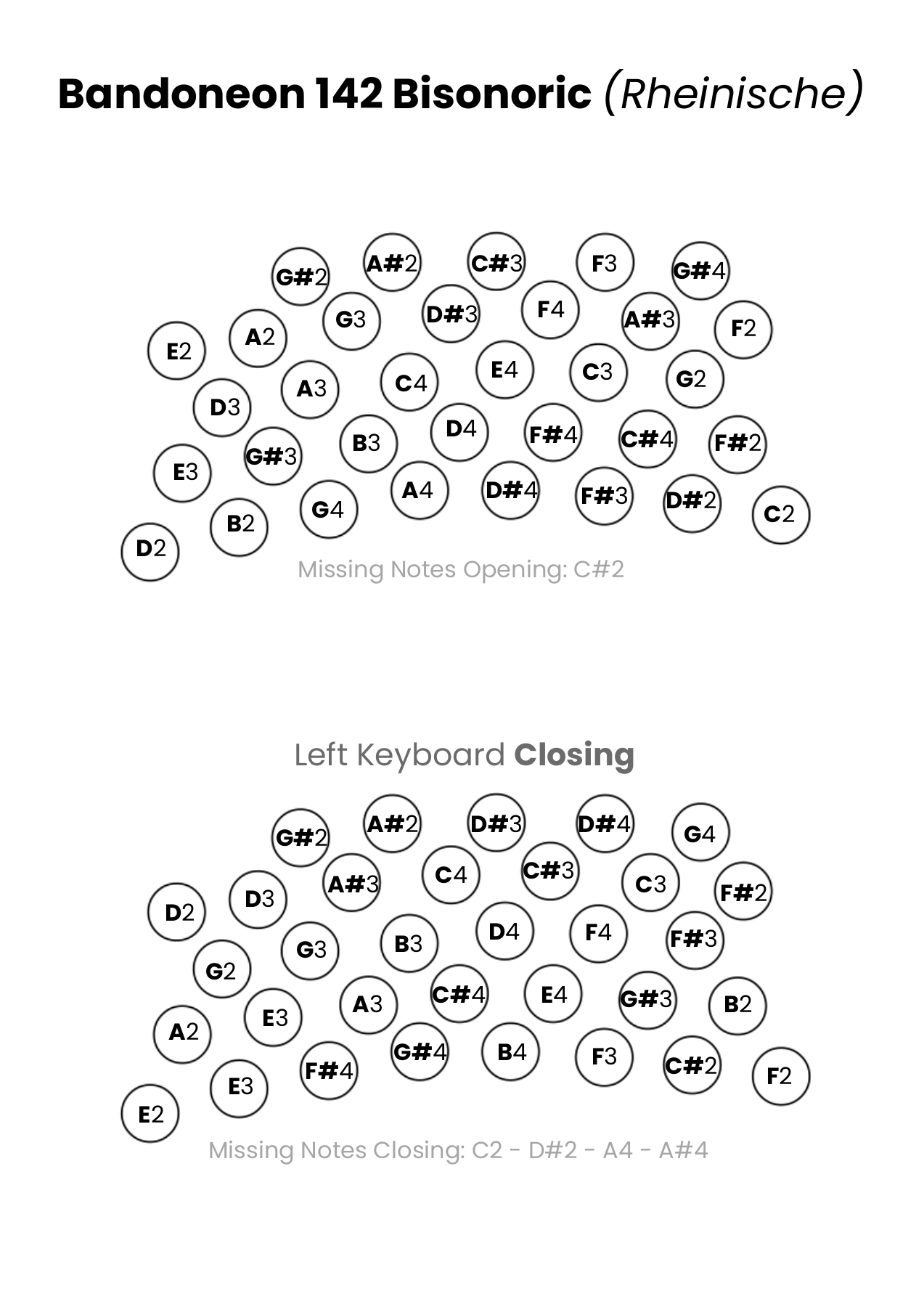
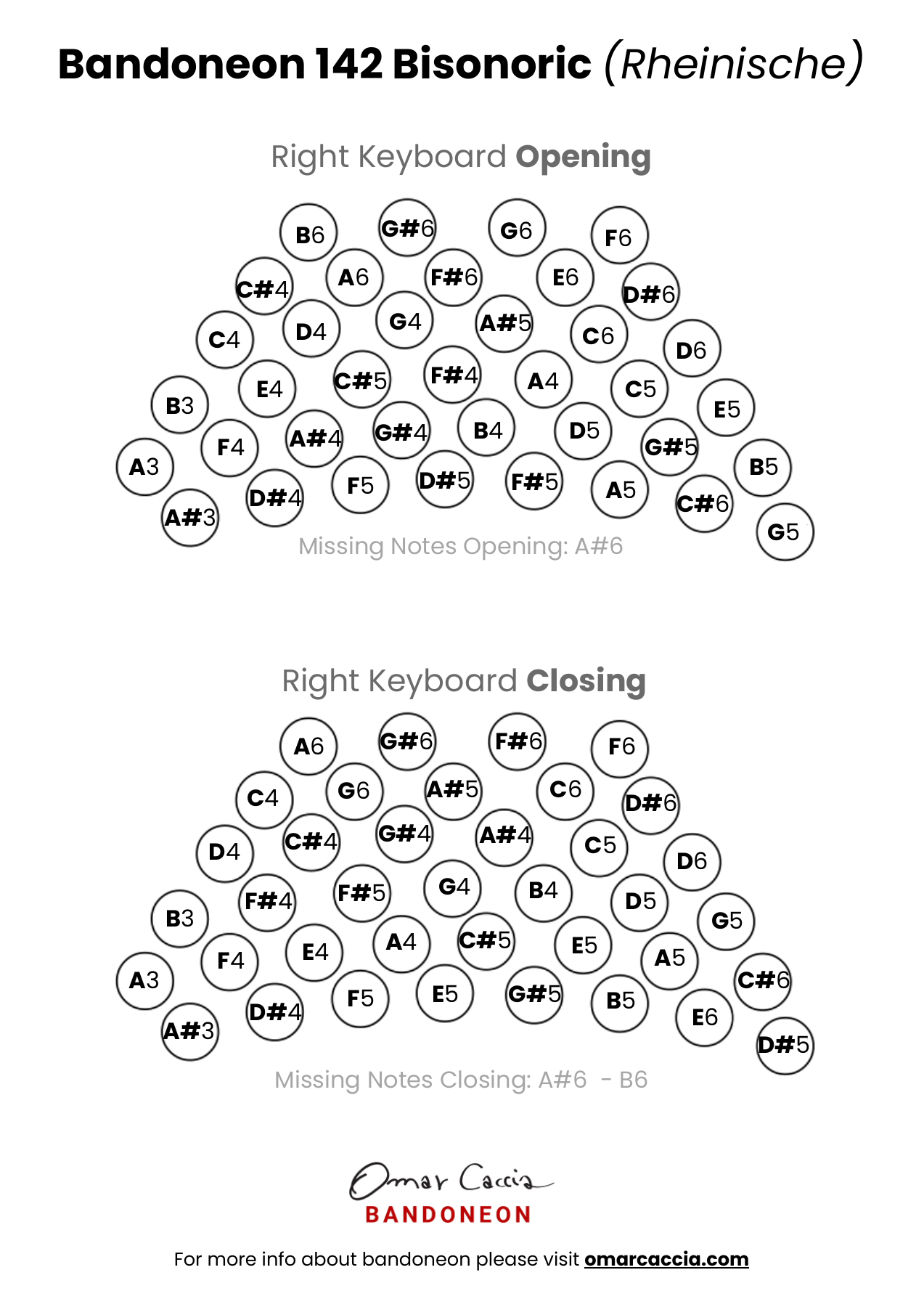
Source: Horniman Museum and Gardens · MusicDeveloped in Germany and closely associated with Argentine tango. The common 142-tone tango model has buttons on both ends; most produce different notes on push and pull.
The 142-tone Rheinische layout common in tango has 71 buttons. Its left-hand buttons play individual notes rather than the preset bass chords found on many accordions. Other bandoneon systems also exist.