Play the accordion, concertina and bandoneon
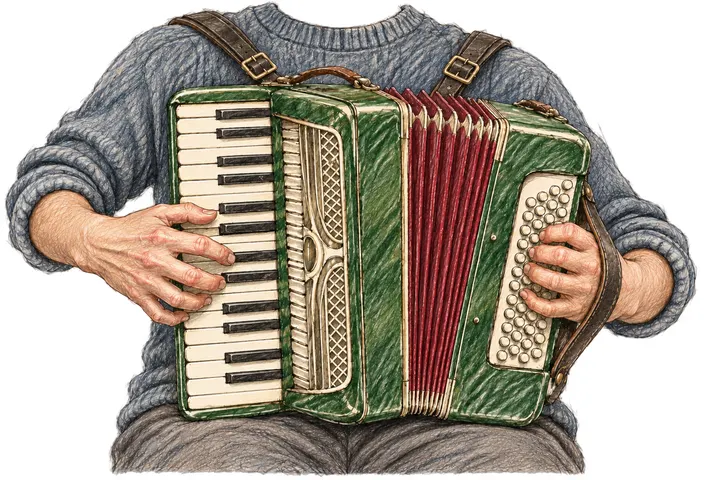
Play the piano accordion with both hands, or try the Erica, Anglo concertina or bandoneon. On the button instruments, keep a button held and reverse the bellows to hear the note change.
Sound starts after you press a key or this button.
Left hand · Stradella bass
Each column is one key, arranged in fifths. Bass buttons play one note; chord buttons play a whole chord. The C bass button is marked, as on many real instruments, so players can find it by touch.
Bellows ◀ Opening ▶
Right hand · melody keys
Two octaves, C4 to C6. Slide across the keys to play a glissando.
Play along
Follow the highlighted key and chord button to play the opening of “Twinkle, Twinkle, Little Star”.
The sound is a simple synthesised approximation of free reeds, not a recording of an instrument. Register names and reed tunings differ between makers.
Playing with a computer keyboard
- Bottom letter row (Z, S, X, D, C…) plays C4 to C5; the top row (Q, 2, W, 3, E…) continues from C5 to C6.
- Use the mouse or touch for the left-hand buttons while your other hand plays the keyboard.
- Press Space to reverse the bellows at the end of a phrase.
What the controls show
Stradella bass
The left-hand buttons here are a 32-button excerpt of the Stradella system. Full instruments commonly have 48 to 120 buttons and add counterbass and diminished-chord rows.
Registers
Register switches choose which reed sets sound. A musette register mixes slightly detuned reeds, which creates the shimmering beat heard in French musette.
Bellows
Air from the bellows makes the reeds sound. Players reverse the bellows at musical breaks, and pressure shapes loudness and accent.